
Custom Reservation and Payment Plugins: The Alternative to Off-the-Shelf Solutions
Off-the-shelf reservation plugins slow your site down and force their design on you. The alternative: build your own. Case study from the Arboretto Hotel project — a custom reservation and payment module, clean, fast, delivered on WordPress.
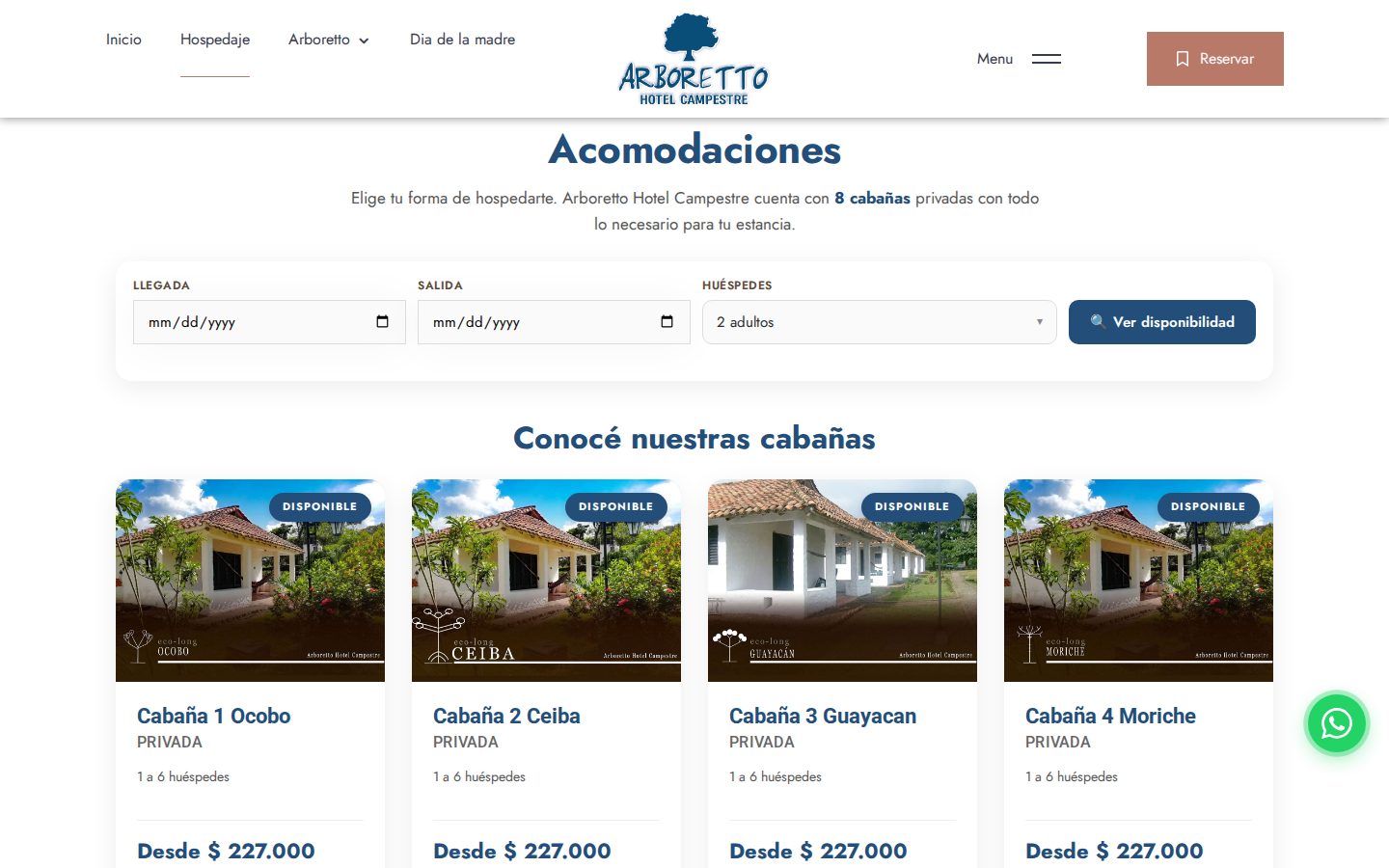
Most hotels and lodging properties use a reservation plugin bought off the marketplace. It works — at first. Then the issues start showing up: the site lags, the booking interface looks nothing like the rest of the brand, checkout redirects through an external domain, and every plugin update breaks something. Not to mention the recurring fees the platform takes per reservation.
For the Arboretto Hotel project (cabanas-villavicencio.com), we made the opposite choice: build a fully custom reservation and payment plugin, integrated directly into the client's WordPress theme, with no external dependency.
The problem with off-the-shelf plugins
On a typical WordPress site, a third-party reservation plugin adds:
- 300 to 800 KB of JavaScript loaded on every page, even those without any booking form.
- Extra stylesheets that conflict with the theme and force you to use
!importanteverywhere. - An iframe or redirect to the vendor's domain at payment time — losing tracking, hurting user trust.
- Variable fees (1 to 3% per reservation) on top of bank fees.
- No control over data — the database lives at the vendor's, not yours.
For a property that takes 30 reservations a month, that's manageable. For a project that wants to scale, it's a ceiling.
What we built for Arboretto
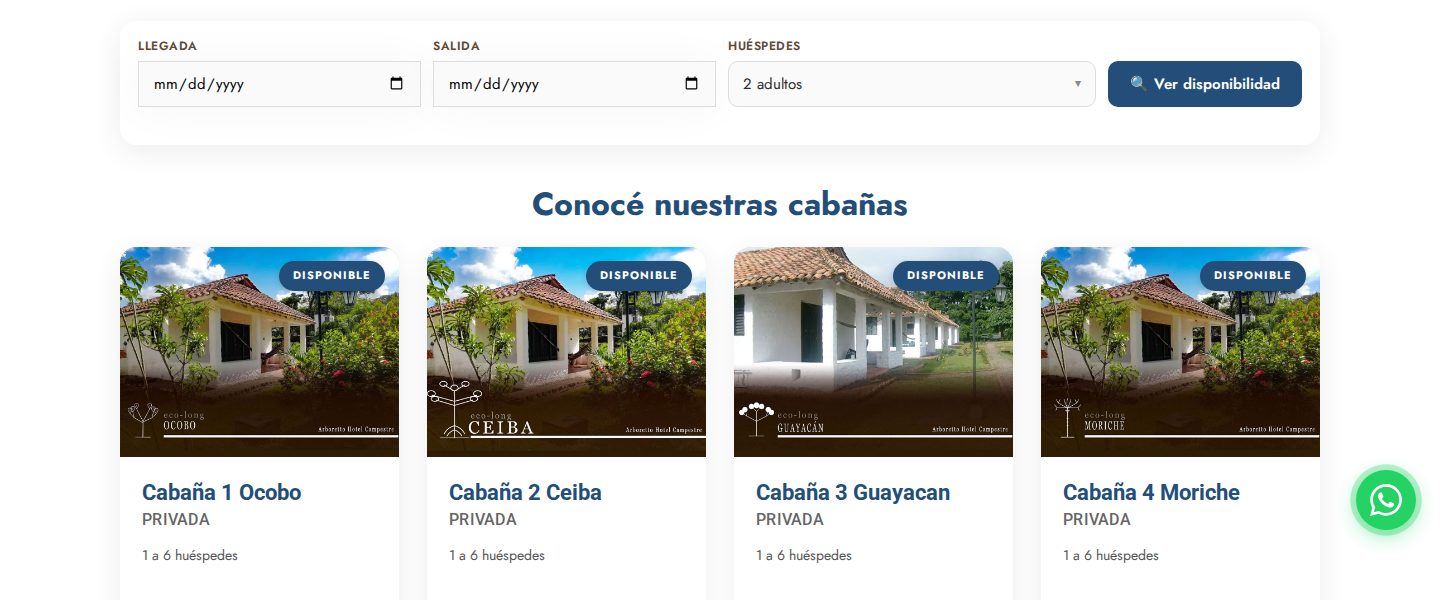
The module we developed is a proprietary WordPress plugin that handles the entire funnel:
- Date picker with real-time availability calendar, tied to the WordPress database (custom post types
cabinandreservation). - Guest configuration: adults, children by age range, pets — each variable affects pricing.
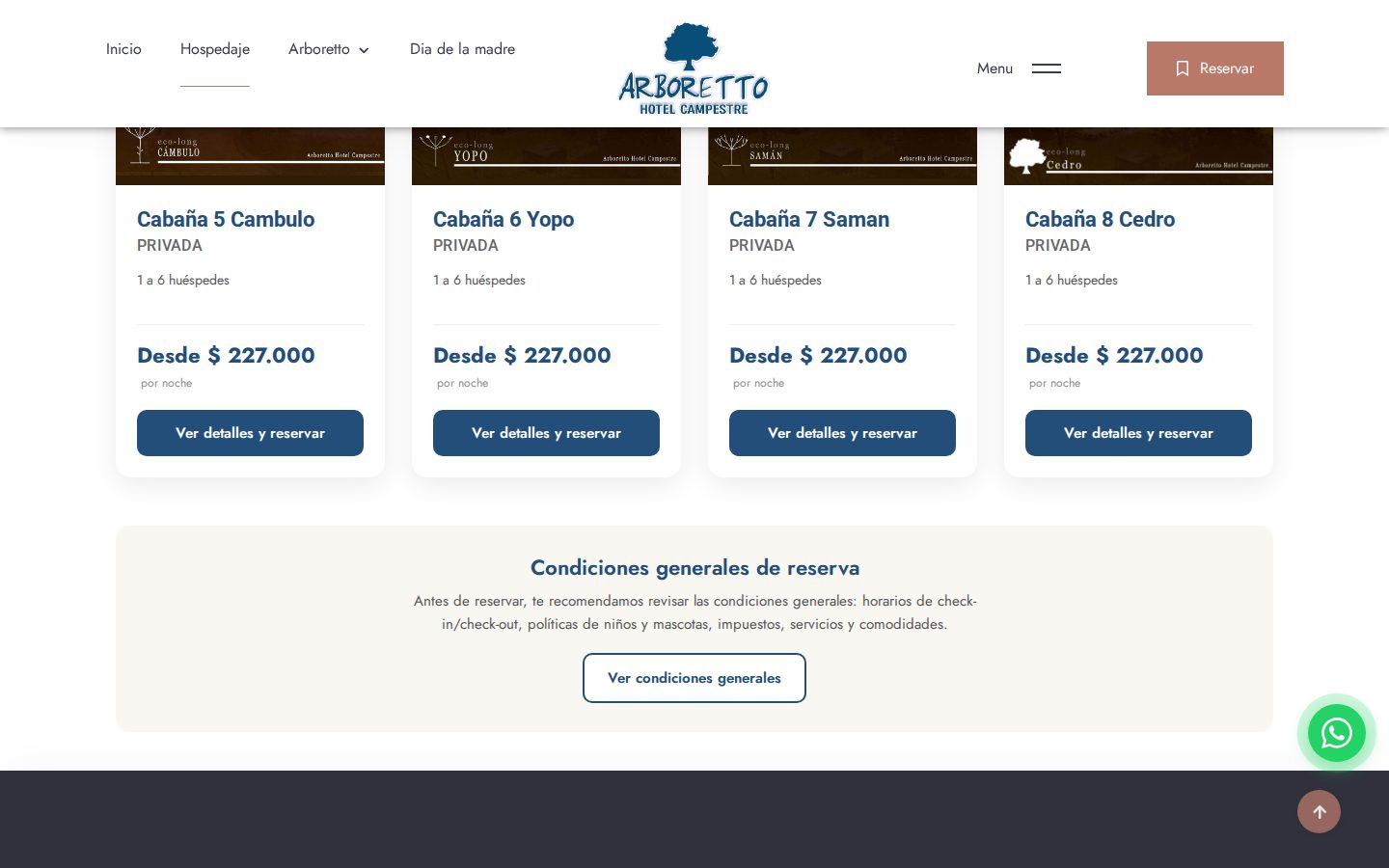
- Filtered cabin listing based on capacity and chosen dates.
- Payment funnel embedded in the site, no redirects — the customer stays on the client's domain throughout.
- Email confirmation with summary, terms, and check-in link.
- Native WordPress back office to view reservations, statuses, and export to CSV.
- Two-way iCal sync with Airbnb, Booking.com, Vrbo, and any other platform that exports a
.icscalendar. Dates booked on one channel are automatically blocked on the others — no more overbookings from forgetting to sync manually. - Call-to-action forms wired to the hotel's WhatsApp Business account. Guests fill out the form, get a personalized WhatsApp reply in seconds — no lost emails, no impersonal chatbots.
- Services-page plugin with content optimized in Markdown. The hotel's service pages (dining, activities, events) are edited in Markdown straight from the back office, guaranteeing rock-solid SEO hierarchy and optimal readability for Google and AI tools — exactly the logic we recommend in our Markdown article.
Why it's faster than a marketplace plugin
Three technical choices make the difference:
1. Clean code, minimal dependencies
No jQuery (the plugin uses native JavaScript), no embedded CSS framework, no heavyweight date-picker library. The full module bundle weighs less than 50 KB gzipped, compared to 300–800 KB for off-the-shelf solutions.
2. Conditional loading
The plugin only loads its scripts on pages where it's needed (accommodations page, individual cabin page). Other pages stay light. With a standard commercial plugin, everything loads everywhere.
3. CSS aligned with the site's design system
The widget interface uses the theme's CSS variables: typography, colors, border radii. No !important, no overrides. The result: a module that looks hand-crafted, not glued on after the fact.
Measurable results
On the home page and the booking page:
- LCP (Largest Contentful Paint): 1.1 s on simulated 4G mobile.
- CLS (Cumulative Layout Shift): 0.02.
- Total JavaScript executed: 75 KB (vs ~600 KB with a comparable third-party plugin).
- Per-reservation fees: zero on the platform side — only standard bank fees.
And from the end-user perspective: a booking flow that completes in under 30 seconds, from clicking "check availability" to payment confirmation.
When this kind of build makes sense
This type of development only makes sense if the project meets at least one of these conditions:
- Enough volume for commercial-plugin fees to become significant (starting around ~50 reservations/month).
- Strong brand identity that off-the-shelf plugins can't respect without hacks.
- Specific business logic: dynamic pricing, surcharges, packages, minimum-stay rules, multi-property setups.
- Wanting to keep customer data in-house, not handed to an external vendor.
If the project is a brochure site with 5 reservations a month, a standard plugin does the job.
What we now offer
The module developed for Arboretto has become a packaged product at RV3 Agency: we adapt it to the client's WordPress theme, connect it to their payment provider, and deliver a fast, clean, autonomous site — with no recurring per-reservation fees.
Request a free audit of your current reservation site: we'll tell you honestly whether migrating to custom is worth it, or whether your current solution is fine.