
Custom E-commerce Infrastructure: Why Move Beyond Packaged Platforms
Shopify, WooCommerce, PrestaShop — these platforms get you to market fast, until they start holding back your growth. Case study from colombiaecommerce.com: a 100% Next.js e-commerce infrastructure with a custom CMS, built for performance and scale.
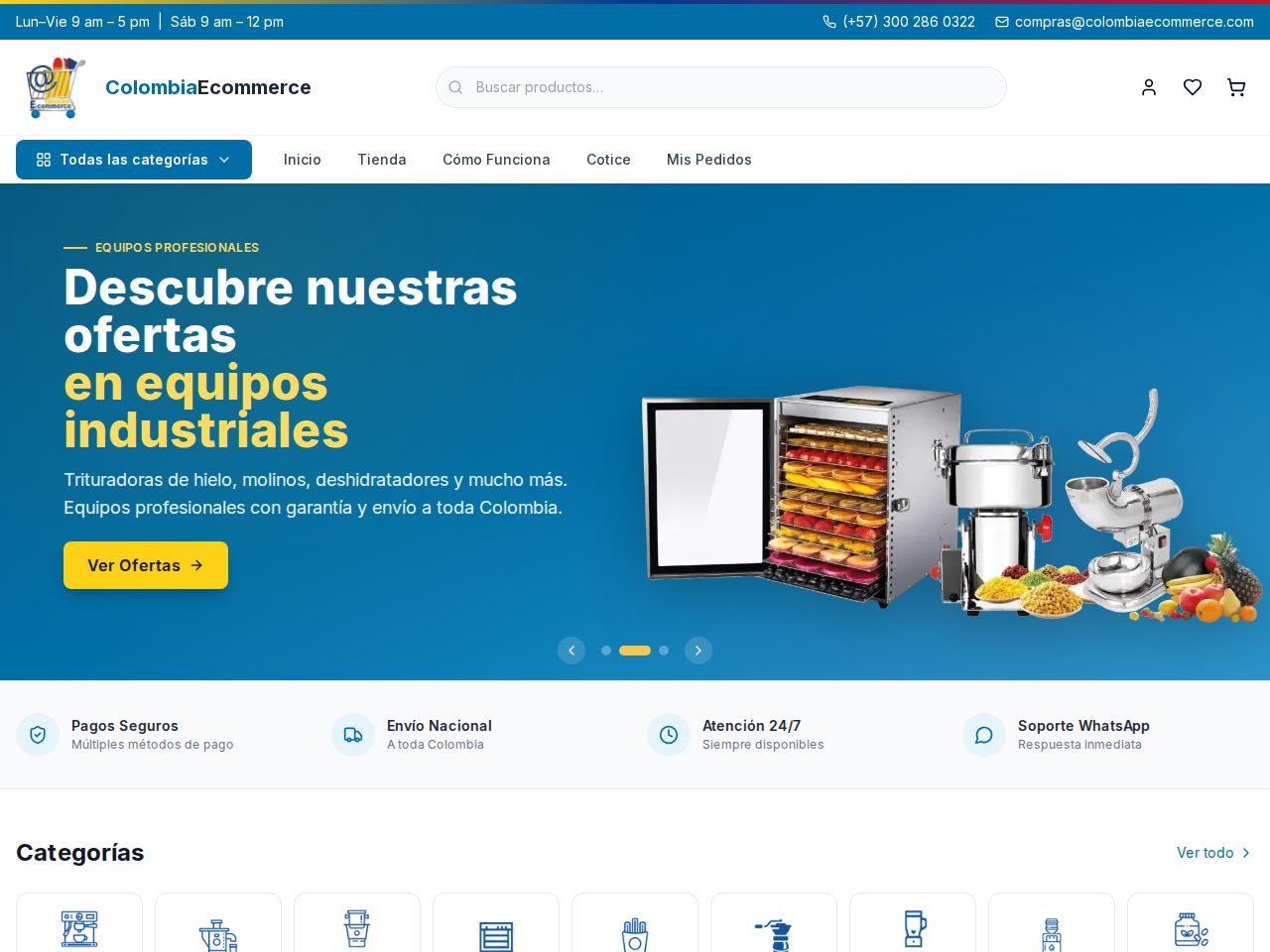
When you launch an e-commerce business, the default reflex is almost always Shopify or WooCommerce. It's quick, there are themes, plugins, and you're online in two weeks. For 80% of projects, that's the right call.
For the remaining 20% — those with specific business logic, growing volume, or strong performance and design demands — those platforms become a brake. That's exactly the context in which we shipped colombiaecommerce.com: a 100% custom e-commerce infrastructure, in Next.js, with an in-house CMS.
The wall of packaged platforms
On Shopify or WooCommerce, the first symptoms appear around month 6 to 8:
- The site lags as soon as you add 4–5 apps (live chat, reviews, upsell, abandoned cart, advanced analytics).
- Checkout is rigid: you can't modify the funnel without paying for an upgrade or hiring a senior dev hourly.
- Stacked fees: platform subscription + theme + apps + plugins + transaction fees = often $250–800/month before a single sale.
- Technical SEO hits a ceiling: mediocre Core Web Vitals, hard-to-customize tags, sitemaps you don't really control.
- Customer data is captive: exporting, migrating, plugging in a CRM becomes its own project.
For a high-volume project or one with a long-term vision, those ceilings end up costing more than custom development.
What we built for colombiaecommerce.com
A custom e-commerce infrastructure, optimized with every version:
- 100% Next.js infrastructure with a custom-built CMS
- Over 10 years of continuous development and client trust
- React Server Components: pages rendered on the server
- Core Web Vitals close to 100/100, green on mobile and desktop
- Payment built into the site, no external redirect
- Persistent cart that survives reloads and browser closes
- Reactive catalog search and filters
- Automatically optimized images and fonts
- Zero unnecessary third-party scripts slowing the site
- Cart and checkout endpoints protected against bots
- Transactional emails (order, password) via a dedicated API
- Technical SEO: JSON-LD schema, meta tags, XML sitemap, canonical
- Clean, maintainable code with automated deployment (CI/CD)
- Monthly maintenance contract and continuous evolution
- Full ownership of data and code, on the client's side
Why it outperforms a standard Shopify
1. Nothing useless gets loaded
On an average Shopify store, every page loads 4 to 8 third-party app scripts: tracking, reviews, upsell, chat, exit-intent, etc. On our stack, everything is in the code we write. If a feature doesn't exist, it doesn't slow the site down.
2. React Server Components
Product, category, and catalog pages are rendered server-side. The HTML arrives ready to display, without waiting for a JavaScript framework to boot in the browser. On 4G mobile, that's the difference between 1.2 s and 4.5 s before first useful render.
3. Custom CMS = code that fits
The admin panel we built has only what the business team actually needs: product creation, inventory management, order tracking, accounting export. No useless options, no apps to configure, no risk of breaking everything by clicking the wrong place.
4. Scalability with no ceiling
Multi-language, multi-currency, multi-warehouse, ERP integration, shared mobile app, B2B marketplace: all of it gets added in code, without paying for a plan upgrade. The project is 100% the client's property.
The real cost: custom vs platform
| Item | Packaged platform (year 1) | Custom (year 1) |
|---|---|---|
| Initial build | $3–8k (theme + apps) | $15–30k (development) |
| Subscriptions / hosting | $250–800/month | $50–200/month |
| Transaction fees | 0.5–2% on top of bank fees | 0 (bank fees only) |
| Customization ceiling | Low — bound by platform | None |
| Vendor lock-in | High | None (codebase owned) |
Initial investment is higher, but the break-even sits between 12 and 24 months depending on volume. Beyond that, custom is structurally cheaper every month.
Who this kind of infrastructure fits
- E-commerce with monthly volume > 100 orders where transaction fees start to bite.
- Project with specific business logic (configurator, quotes, bundles, B2B/B2C pricing, subscriptions).
- Brand wanting strong identity without being dragged down by Shopify theme limits.
- Team wanting full control of customer data and technical roadmap.
If the goal is just to sell 20 products/month from an Instagram shop, Shopify is still more relevant.
What we now offer
The infrastructure built for colombiaecommerce.com became our custom e-commerce foundation at RV3 Agency. We adapt it for each client: design, catalog, funnel, business integrations — keeping performance and code ownership intact.
Request a free audit of your current e-commerce: we'll look at your stack, your monthly costs, your performance, and tell you honestly whether migrating to custom would pay off.